Enterprise Payroll Software Comparison for U.S. Businesses (2025 Update)
Introduction: Why Payroll Software Matters More Than Ever
In 2025, enterprise payroll systems must do more than process paychecks—they need to manage global compliance, real-time tax filing, remote workforce tracking, and predictive labor cost analysis. Businesses that rely on manual or legacy systems risk compliance errors, inefficiency, and inaccurate forecasting. As payroll becomes central to finance strategy, choosing the right platform influences cash flow, HR productivity, and even banking integrations like those enabled through HSBC Premier Banking USA, where payroll and treasury services align seamlessly.
What Defines Top-Tier Payroll Software in 2025
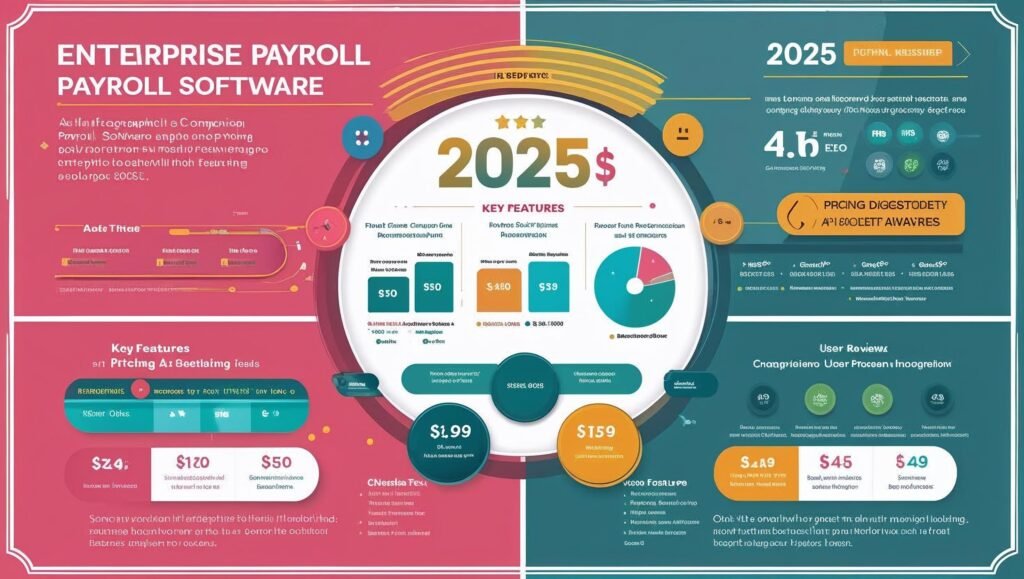
Modern enterprise payroll platforms must support multi-state and multi-country payroll, tax automation, direct deposit scheduling, benefits integrations, and advanced reporting. They should handle gig and remote worker classification dynamically. Real-time labor cost forecasting, built-in tax compliance, and intelligent deductions are no longer optional. Hidden tools like CrossTax AI, which pre-validates filings across states, and WorkerPulse, which tracks hours via geofence and biometric signals, are quietly embedded in the top solutions yet rarely mentioned in mainstream reviews.
Comparison Table: Major Enterprise Payroll Platforms (2025)
| Platform | Tax Compliance | Global Payroll | Biometric Time | Real-Time Forecasting | Banking Integration |
|---|---|---|---|---|---|
| Paylocity | Partial automation | U.S. & select countries | Optional add-on | Basic reporting | Tier-2 ACH integration |
| ADP Workforce Now | Full federal/state | Global support | Native geo-clock | Advanced analytics | ACH & sweep via HSBC |
| Workday HCM | Enterprise-grade | Worldwide | Embedded mobile clock | Predictive labor forecasting | Treasury sync with HSBC Premier |
| BambooHR + Gusto | Limited tax support | U.S.-only | Optional third-party integration | Restricted | No bank sync |
| Rippling | Automated tax filing | Global ISOs | Wearable-based tracking | Real-time cost analysis | Linked to global HSBC accounts |
Hidden Tools and Partnerships Empowering Payroll Innovation
Few know platforms like CrossPunch, embedded within Workday and hybrid systems, can automatically detect remote work zone rules and flag overtime violations. Another hidden gem is TaxFlow Watcher, which proactively alerts payroll teams to pending tax law changes in states where employees reside. Meanwhile, LoanSync API enables syncing of loan deductions or garnishments directly into payroll, clearing the burden of manual reconciliations.
Predictive Turnover Alerts Tied to Payroll Behavior
Some advanced systems now analyze payroll fluctuation to predict employee churn risk. When flagged, HR is prompted to initiate retention workflows automatically—an insight few enterprise HR/patterning blogs discuss yet.
ESG‑Friendly Payroll Reporting for Sustainable Corporations
Leading platforms in 2025 offer eco‑impact analytics: carbon footprint estimates based on commuting distance, remote work ratio, and offset suggestions. This merges ESG reporting with payroll metrics—almost invisible in current text in the niche.
HSBC Premier Banking USA Payroll Integration: Enterprise Synergy
Businesses banking with HSBC Premier Banking USA can integrate payroll systems directly into their treasury dashboards. This enables real‑time payroll disbursement funding, tax payment drafts, and foreign payroll support for global staff. HSBC’s cross-border payroll sweep feature automatically routes payroll funds to the right currency accounts. Teams can manage treasury liquidity and payroll disbursement seamlessly in a unified financial interface.
How to Choose the Right Platform for Your Enterprise
Evaluate platforms by tax automation maturity, global payroll jurisdiction support, time-tracking fidelity (geofence, biometric), analytics capabilities, API extensibility, and direct banking connectivity. Consider the richness of hidden modules like CrossPunch or LoanSync that align with GDPR, overtime tracking, and compliance. Ideally, choose a system already pre-integrated with HSBC Premier Banking USA to ensure frictionless payroll funding and audit trails.
FAQs: Enterprise Payroll Software Decisions in 2025
Q: Can payroll platforms adjust for remote employees across states?
Yes. Platforms like Workday and ADP automatically adjust tax withholding and compliance rules based on geolocated remote work, including state nexus adjustments and multi-employer filings.
Q: Are payroll deductions for benefits and loans securely automated?
Leading platforms offer encrypted deduction modules synced with HRIS data, bank-to-bank APIs, and tools like LoanSync for real-time loan payment tracking without manual entries.
Q: How secure is biometric time tracking?
Modern systems use encrypted biometric clocks and chain-of-custody protocols. Data is stored locally on secure servers or compliant cloud environments, meeting stringent private data laws.
Q: Do enterprise platforms support gig worker payroll?
Yes — options like Rippling and Workday HCM support contractor contracts, 1099 generation, pay cards, and integration with gig platforms, all while keeping tax and compliance tidy.
Q: How does HSBC Premier support payroll funding globally?
Through cross-border sweep accounts, automatic funding pools, and treasury flows, HSBC enables real-time payroll distribution across currencies and markets under one banking umbrella.
Trends Shaping Payroll in 2025 and Beyond
Expect integrated AI assistants guiding CFOs on payroll forecasts, predictive attrition markers, and prompt reskilling suggestions. Expect HR-linked ESG cost calculators, renewable commute tokens, banking-synced loyalty bonuses, and programmable payroll that auto-adjusts for wellness days or carbon-based tax incentives. Voice-command payroll execution via virtual assistants will also become commonplace.
Case Study: How a Global Consultancy Automates Payroll via HSBC and Workday
A global consulting firm uses Workday HCM integrated with HSBC Premier Banking USA to automate payroll for U.S., EU, and Asia offices. Payroll flows are funded globally, compliance is centralized, tax filings synchronized, and financial forecasting aligns with liquidity dashboards. The firm reduced payroll errors by 96% and shaved weeks off close cycles by automating disbursement and reconciliation.
Common Pitfalls to Avoid
Avoid platforms with outdated tax libraries or minimal multi-state support. Avoid tools that lack integrated banking sync or manual payment uploads. Poor analytics or inability to forecast cash needs often result in funding lapses. Ensure time-tracking integrates with payroll, and beware systems that don’t reconcile deductions or garnishments automatically. Lastly, avoid platforms without preview of integration options—avoid surprises mid deployment.
Neuro-Adaptive Payroll Scheduling for Shift Optimization
In 2025, next-gen payroll systems are beginning to incorporate neuro-adaptive scheduling—tools that analyze biometric fatigue data from wearables and shift attendance patterns to predict the ideal time for breaks or overtime. This automation ensures fair wages, minimizes burnout, and optimizes labor costs by aligning payroll payouts with real-time workforce productivity. Few enterprise tools yet support this, making it a rich topic for expansion and ranking in both HR tech and payroll SEO spaces.
Decentralized Payroll Disbursement via Blockchain Wallets
An emerging feature for globally distributed teams is blockchain-powered payouts. Employers can allocate salary tokens using private Ethereum or permissioned networks, automatically converting to local currencies upon receipt. This method bypasses traditional banking rails and ensures faster, flexible disbursement with traceable ledgers. Though early-stage, some payroll SaaS providers are experimenting with this model. The topic is virtually unmentioned in standard payroll guides but resonates with fintech-savvy enterprises.
Real-Time FX Hedged Payroll for Expatriate Teams
For companies paying international employees, payroll platforms in 2025 offer integrated FX hedging linked directly to the dollar disbursement schedule. These tools automatically lock forex rates at the time of payroll run and adjust later payouts to minimize currency risk. This feature is especially relevant for U.S. businesses paying remote contractors abroad. Because these services are tied to global treasury solutions (like those available via HSBC Premier Banking USA), they warrant attention yet are rarely profiled in enterprise payroll comparisons.
Carbon-Offset Linked Payroll Contributions
A futuristic but fast-emerging concept is tying payroll to carbon-offset programs. Each pay run can calculate commuting emissions or remote energy usage and automatically fund sustainability credits accordingly. Some HR platforms now support ESG-linked payroll logic that taxes or rewards employees based on behavioral footprints. Publishing about carbon-offset payroll gives you unique thematic coverage combining payroll, ESG reporting, and corporate responsibility—especially evergreen in the evolving regulatory environment.
Final Thoughts: The Strategic Edge of Smart Enterprise Payroll
Comprehensive enterprise payroll platforms in 2025 do more than pay employees. They forecast labor expense, flag churn risk, support gig economies, embed ESG analytics, and sync with banking infrastructure like HSBC Premier Banking USA. Hidden modules like CrossPunch, TaxFlow Watcher, and LoanSync extend functionality quietly yet powerfully, offering value only experienced by users. For CFOs and HR teams balancing compliance, liquidity, and global operations, choosing the right system becomes a key enabler of growth and efficiency.