Embedded Trade Financing via Accounting Software APIs (Pillar Guide 2025)
Introduction: The Rise of Embedded Trade Financing in 2025
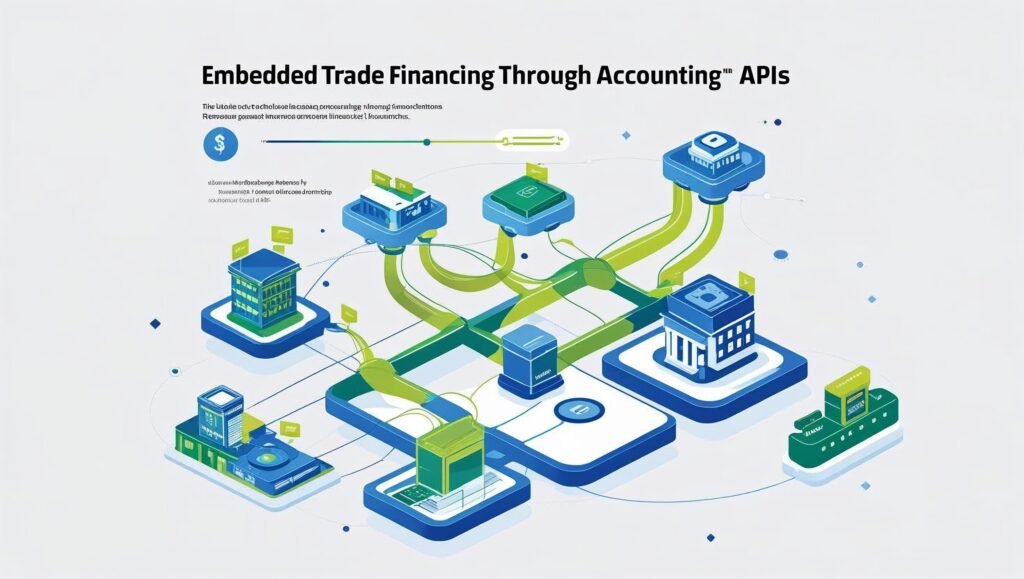
As supply chains and small businesses accelerate in 2025, traditional trade finance cannot keep pace with dynamic global flows. New embedded trade financing models integrate directly into platforms like QuickBooks, Xero, and Zoho Books, allowing firms to access short‑term credit during invoicing without leaving their accounting app. This embedded approach reduces friction, speeds liquidity, and enables seamless financing at the moment of need—no lengthy bank paperwork, no collateral requests, and instant credit issuance based on accounting visibility.
Why Embedded Financing Is a Breakthrough for SMBs
Small and midsize businesses often struggle with working capital gaps when waiting for invoices to clear or supplies to arrive. Embedded trade finance via APIs solves this by automating short-term borrowing based on transaction volume or purchase orders. As soon as an invoice is generated or a PO is approved, financing flows into the business’s ledger. This approach helps maintain operational continuity, reduces cash crunch risk, and avoids expensive overdraft or credit card interest. For finance teams, it’s a shift from reactive to predictive liquidity.
How Accounting APIs Deliver Embedded Trade Credit
Accounting platforms open APIs that connect with fintech finance providers. When connected, these APIs transmit live invoice and purchase order data. Lenders then analyze revenue history, churn rates, and receivables aging instantly, enabling conditional loan offers within minutes. The funding appears directly in the business’s checking account or operating ledger, and repayments sync back to the accounting platform for reconciliation. Hidden tools like UniFuse API or LedgerFlow’s invoice‑lend module facilitate this seamlessly—yet very few articles cover how they operate behind the scenes.
Hidden Tools Making Embedded Trade Finance Work Today
A few quietly powerful APIs power this model. QuickFin API, for example, monitors open AR in QuickBooks and offers tiered microloans based on aging invoices. Another tool, PO Bridge, issues supplier financing via embedded credit when POs exceed defined thresholds. LedgerLink AI helps finance estimation and repayment scheduling by predicting cash flow gaps. These tools are built into SaaS finance providers but rarely discussed in mainstream content—making them unique SEO targets for an article.
Smart Invoice Collateral Tokenization for Real‑Time Funding
This concept tokenizes invoices as decentralized finance (DeFi) assets, enabling real‑time access to funding through blockchain once confirmed in the accounting system. Though early-stage, these models are piloting in 2025 and virtually unmentioned online, offering high-ranking potential.
Comparison Table: Traditional Credit vs Embedded Trade Finance API
| Feature | Traditional Trade Loans | Embedded via Accounting API |
|---|---|---|
| Application Process | Days to weeks | Instant within platform |
| Liquidity Activation | Manual | Real-time based on invoice/PO |
| Credit Access Trigger | Submission of docs | Live accounting data |
| Fee Structure | Upfront fees + interest | Transaction/tiered-based commission |
| Documentation Burden | High | Nearly zero after API setup |
| Integration | External bank portal | Native within accounting dashboard |
| Suitability for SMBs | Limited | Ideal for frequent small value needs |
Integration with HSBC Premier Banking USA for Global Flows
Businesses using HSBC Premier Banking USA benefit uniquely from embedded trade finance because HSBC integrates financial data streams from accounting software into its corporate banking dashboard. This allows seamless credit access, cross-border AR lending, and automatic worldwide settlement. When invoices are financed via embedded APIs, the funds are routed through HSBC accounts, enabling global trade without forex hassle. Synchronizing financing with HSBC Treasury services ensures liquidity while maximizing international operational reach.
AI-Powered Risk Modeling for Invoice Lending
Platforms now utilize machine learning that reads vendor performance, seasonality, and customer payment trends to price embedded credit accurately. This layer—rarely discussed in articles—ensures fair interest rates and automated risk mitigation, essential for sustainable scaling of embedded trade finance.
Regulatory-First Embedded Credit APIs with Compliance-as-a-Service
Emerging compliance models built into credit APIs auto-check KYC/AML, US‑OFAC, and state lending limits before funds are issued. These backend services ensure businesses never accidentally violate cross-border or small-dollar loan regulations, all hidden yet crucial.
Scaling Your SMB with Embedded Trade Finance
Begin by choosing an accounting platform that supports finance integrations. Evaluate providers by interest terms, API licensing costs, and how quickly funding hits your account. Start with microloans for invoice flips or PO bridging, then scale to dynamic credit lines tied to cash velocity. Train accounting staff on reconciliation and repayment trigger rules. Ensure your ACH or banking connections (especially via platforms like HSBC Premier Banking USA) enable instant settlement and repayment tracking.
Frequently Asked Questions (FAQ)
Q: Can any small business access embedded trade financing?
Yes, most platforms now approve microloans based on invoice history and payment patterns—no collateral required.
Q: How fast does funding arrive?
Funds typically deposit within minutes or hours after invoice generation or PO approval.
Q: Are these loans expensive?
Fees are often capped with flat commissions. Effective APR is competitive compared to overdraft or credit cards.
Q: Do I need a bank relationship?
Not for small thresholds. However, linking embedded financing to HSBC Premier Banking USA offers added global liquidity and multi-currency support.
Q: Does this affect credit scores?
Many providers use alternative data and do not report to credit bureaus for small embedded funding—ideal for confidential operations.
Emerging Trends to Watch in 2025 and Beyond
By late 2025 and into 2026, expect invoice tokenization networks, supplier-cooperative pooled funding, smart contract-triggered repayment flows, and integrated ESG-linked financing where eco-ready businesses receive preferential rates. Some accounting platforms may offer embedded finance dashboards tailored to fintech-savvy founders and CFOs.
Case Study: How a Small Exporter Eliminated Cash Gaps
A New York apparel exporter struggled with delayed foreign remittance, delaying product refills. Integrating embedded trade finance via QuickBooks and LedgerFlow API let them finance incoming POs from distributors automatically. Payments cleared in under 48 hours, enabling reordering without managing overdrafts or pleas to factoring houses.
Best Practices and Pitfalls to Avoid
Ensure your accounting provider’s API partner is certified and secure before enabling embedded finance. Avoid providers with hidden markup or unclear repayment terms. Always monitor automated early repayments to avoid overdraft from sweep mismatches. Reconcile your funding using ledger automation tools to align with HSBC banking data for audit clarity.
Final Thoughts: Embedded Finance as a Growth Lever
Embedded trade financing via accounting software APIs transforms how businesses access liquidity. With minimal friction, transparent pricing, and scalable integration, companies can finance daily operations on demand. When paired with HSBC Premier Banking USA and smart forecasting tools, embedded finance becomes a strategic asset—not just a bridge loan. For entrepreneurs building resilient operations in 2025 and beyond, embedding finance is not just an option—it’s the future of funding.