Introduction
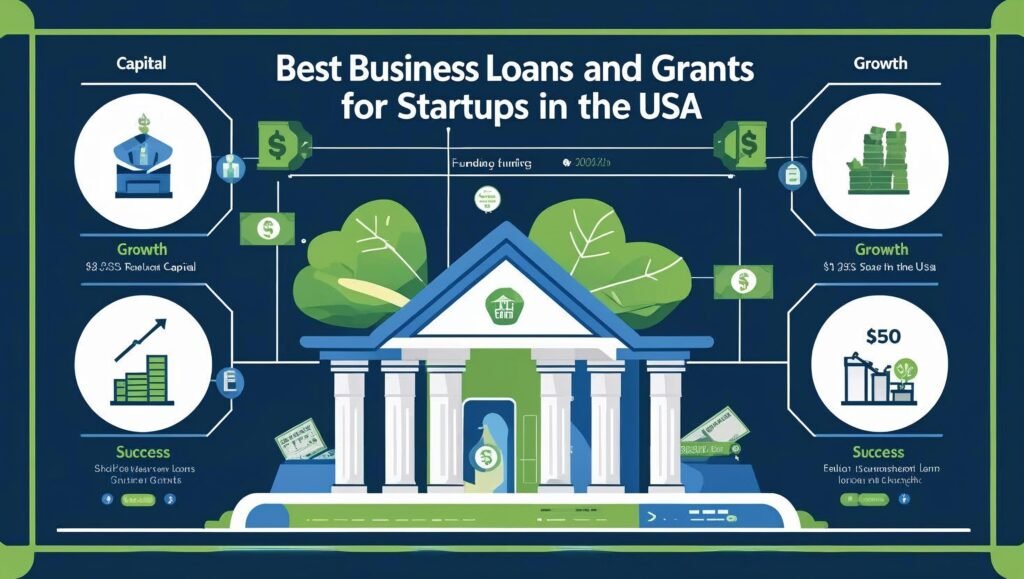
Starting a business in the USA in 2025 requires more than a vision. It demands capital—and lots of it. Whether you’re launching a tech startup in Silicon Valley, a food truck in Austin, or a digital agency in New York, the right business loan or grant can fuel your first year and set you on a path toward growth. But in a market flooded with options, finding the most effective, fastest, and low-risk funding route is critical.
This guide explores the best loans and grants for startups in 2025, offering a deep dive into mainstream and hidden opportunities with real-time relevance, evergreen advice, and a roadmap for approval.
Why Startup Funding is Crucial in 2025
With inflation, competition, and evolving digital landscapes, 2025 has made starting a business more complex—but also more rewarding. Funding helps cover inventory, payroll, licenses, equipment, marketing, and technology. Moreover, it gives breathing room in the early phase when revenues are uncertain.
Whether through a loan with flexible repayment or a grant that doesn’t need to be repaid, external funding can determine whether your business thrives or folds within its first year. Smart entrepreneurs in 2025 are optimizing both funding types in a hybrid approach.
Types of Funding: Loans vs Grants
Business loans are borrowed capital that you repay with interest over time. Grants are non-repayable funds awarded by government bodies or organizations. Loans tend to be faster but involve risk and credit checks. Grants are harder to get but offer debt-free cash flow.
In 2025, many startups opt to combine both: securing small loans for short-term expenses and applying for grants to support long-term development.
Top Business Loans for Startups in the USA (2025)
SBA Microloan Program
The U.S. Small Business Administration (SBA) offers up to $50,000 to eligible startups. These loans are ideal for working capital, equipment, or inventory.
Kiva U.S.
A no-interest, community-funded platform offering up to $15,000. Best for early-stage founders without strong credit history.
Lendio Marketplace
Lendio aggregates 75+ lenders into one platform. In 2025, their startup funding packages include revenue-based financing and low-doc short-term loans.
Accion Opportunity Fund
Specializing in underserved communities, this nonprofit lender offers up to $100,000 in working capital with education resources and mentorship.
Bluevine Line of Credit
Best for tech startups and agencies, Bluevine provides up to $250,000 with instant access and AI-powered repayment scheduling.
Hidden and Niche Loan Programs in 2025
USDA Rural Business Loans
Few founders know the USDA supports non-agricultural rural businesses. If you’re operating in rural zones, you may qualify for up to $1 million in low-interest loans.
Community Advantage Loan (SBA)
This SBA pilot supports underserved entrepreneurs who don’t meet traditional loan standards, particularly minorities, women, and veterans.
Local CDFI Loans
Community Development Financial Institutions (CDFIs) provide highly personalized funding. In 2025, many offer hybrid loans with grant matches.
EIDL Disaster Loans (Revised 2025 Edition)
Originally launched for pandemic recovery, EIDL loans are now available to startups impacted by climate events or inflationary supply-chain disruptions.
Best Business Grants for Startups in the USA (2025)
FedEx Small Business Grant Contest
Winners receive up to $50,000 in funding plus marketing support. Ideal for product-based businesses and solopreneurs.
U.S. Economic Development Administration (EDA) Grants
Focused on innovation and job creation, these grants vary by region and typically offer $25,000–$200,000 for qualifying startups.
Amber Grant for Women
Monthly $10,000 grants awarded to female founders with a mission-driven business model.
National Association for the Self-Employed (NASE)
Provides up to $4,000 in grants for equipment, marketing, and expansion costs.
Minority Business Development Agency (MBDA) Grants
Targeted at BIPOC-owned businesses, these grants support expansion and development efforts nationwide.
Undiscovered Federal & Private Grant Opportunities
Clean Tech Startup Grants (DOE 2025 Program)
The Department of Energy quietly funds up to $250,000 for green startups in renewable energy, carbon capture, and sustainable agriculture.
Mozilla Builders Incubator Fund
While not well known, Mozilla offers equity-free grants for startups building ethical AI and open web technologies.
Hello Alice Grants Platform
Aggregates under-publicized grants from brands like Progressive, Alibaba, and DoorDash. Updated weekly with niche grant challenges.
State-Specific Innovation Vouchers
Several states (e.g., Massachusetts, Indiana) offer “innovation vouchers” of $10,000–$50,000 for startups to spend on R&D with universities.
Comparison Table: Loans vs Grants for Startups in 2025
| Feature | Business Loans | Business Grants |
|---|---|---|
| Repayment Required | Yes | No |
| Credit Check Needed | Usually | Rarely |
| Speed of Access | Fast (1–7 days) | Slow (1–6 months) |
| Amount Available | $5,000–$1M | $1,000–$250,000 |
| Ideal For | Short-term expenses, cash flow | R&D, innovation, social impact |
| Risk Factor | Medium to High | None |
Factors to Consider Before Applying
Before pursuing any funding, assess your business plan, repayment ability, and eligibility. For loans, prepare your financials, tax history, and business credit reports. For grants, draft a compelling mission and measurable impact goals.
Understand the terms, interest rates, and obligations. Avoid predatory lenders and always validate the authenticity of grant programs—especially those soliciting application fees.
Industry-Specific Funding Options for Startups
Tech Startups
Look into angel-backed convertible notes, CleanTech grants, and venture-capital linked loan hybrids.
Food & Beverage
USDA, SBA Microloans, and local kitchen incubator grants offer targeted funding with mentorship.
E-Commerce
Use Bluevine credit lines and apply for Meta’s 2025 Small Business Creator Grant.
Health & Wellness
Eligible for NIH innovation grants and private foundations offering up to $300,000 for healthcare tech solutions.
Experimental Grant-Loan Hybrids Emerging in 2025
A new class of financial instruments is gaining traction in 2025—grant-loan hybrids. These options combine non-dilutive capital with flexible repayment terms based on business performance rather than fixed installments.
Growth-Based Repayment Models (GBRMs)
Some state programs now offer grants that turn into loans only if revenue targets are met. If the business doesn’t hit growth benchmarks, repayment is waived. These models are being piloted in New York, Oregon, and Colorado.
Forgivable Tech Equity Loans (FTEL)
The Department of Commerce, in collaboration with private incubators, is testing forgivable loans to AI and green tech startups. If companies hit predefined innovation milestones within 18 months, the loans are fully forgiven.
Dual-Track Financing Pilots
Startups can now apply for joint grants and loans simultaneously under unified applications. Programs from EDA and local accelerators are offering bundled funding in sectors like mobility tech and clean logistics.
Unconventional Funding Models: Equity-for-Services, DAO-based Capital
Some 2025 startups are bypassing traditional financing altogether. Here are next-gen methods gaining popularity, especially among Gen Z founders and Web3 entrepreneurs.
Equity-for-Services Agreements
Instead of cash, some startups are funding operations by offering equity to marketing firms, developers, or logistics partners. This model reduces upfront costs and aligns service provider incentives.
DAO-Based Capital Raising
Decentralized Autonomous Organizations (DAOs) allow startups to raise funds from token holders globally without venture capital. While still emerging, DAO-led seed funding is rising, especially in sectors like DeFi and gaming.
NFT Crowdfunding for Local Startups
Local food, music, and art-based startups are minting NFTs with redeemable utility—such as free meals, early access, or equity perks—to fund their business launches. This trend is growing in cities like Austin, Seattle, and Miami.
Trending Startup Funding Themes in 2025
Startup funding in 2025 is not just about access—it’s about alignment with societal shifts, emerging technologies, and scalable impact. These trending themes are shaping where capital is flowing most rapidly:
Climate-First Capital
Investors and grant providers are prioritizing carbon-negative or circular economy startups. If your startup contributes to net-zero goals or regenerative systems, you’re more likely to attract funds from green accelerators and federal green-tech vouchers.
FemTech and Inclusive Health Startups
Healthcare startups that cater to underrepresented populations—such as Black maternal health or LGBTQ+ wellness—are receiving targeted grants and equity-free awards from both NGOs and tech-forward VC firms.
Micro SaaS for Blue-Collar Industries
Small-scale software products built for tradespeople (plumbers, welders, technicians) are on the rise. These underserved niches are attracting capital due to low competition and high ROI. New grants under the Dept. of Labor’s Tech Reskilling Act may support such tools.
Founder Wellbeing Initiatives
Mental health support for entrepreneurs has become a funding theme. Startups offering services or tech solutions in this space—especially for minority founders—may qualify for 2025 wellness innovation grants.
Supply Chain Resilience Startups
With global instability affecting logistics, startups focused on hyperlocal, transparent, and AI-optimized supply chains are receiving fast-track funding from federal and private sectors.
FAQs
Q1: Can I apply for both loans and grants at the same time? Yes. Many startups use grants to reduce risk while leveraging loans for immediate needs.
Q2: Do I need a business plan for applying? Absolutely. Both grantors and lenders require a strong, data-backed business plan.
Q3: What’s the biggest mistake first-time founders make with funding? Ignoring fine print and overestimating revenue projections. Always plan conservatively.
Q4: Can non-citizens apply for U.S. startup grants? Some private and state-level grants are available to legal residents or visa holders, but eligibility varies.
Q5: Are there grants for solo entrepreneurs? Yes. Programs like Amber Grant, Hello Alice, and local women/minority grants support solopreneurs.
Conclusion
Startup success in 2025 isn’t just about great ideas—it’s about funding them wisely. From SBA loans to hidden innovation grants, the funding landscape is more accessible than ever for those who know where to look. Prioritize your needs, research thoroughly, and balance loans with grants to avoid unnecessary debt.
With the right strategy and updated knowledge, you can tap into millions of dollars in funding and give your startup the launchpad it truly deserves. Whether you’re building a tech platform, a retail brand, or a consulting agency, 2025 is rich with opportunities—if you know where to look.
2 Comments