
AI‑Enhanced Credit Scoring for SMBs Using Behavioral Data in 2025
The New Era: How AI Revolutionizes Small Business Lending
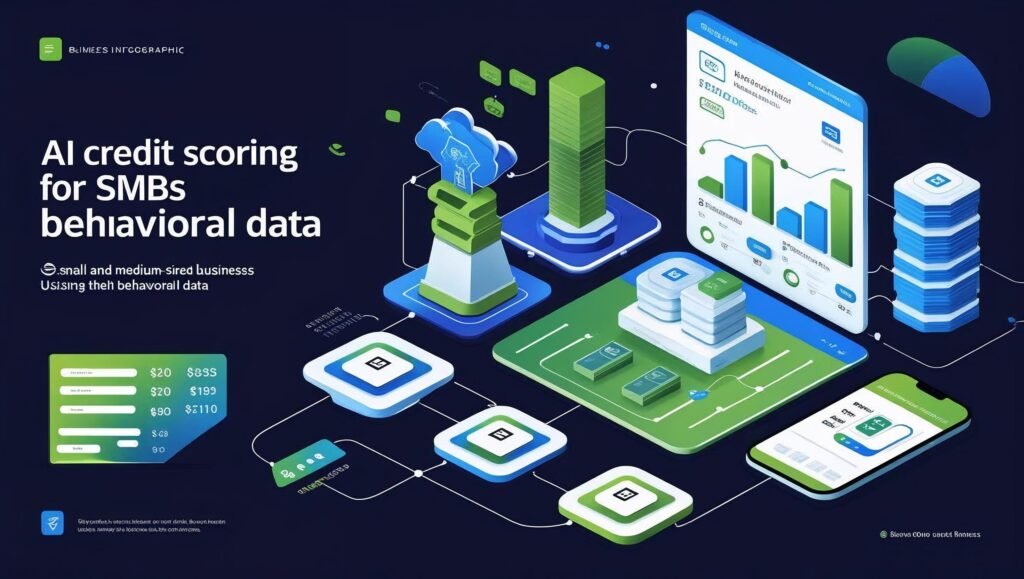
Artificial intelligence is transforming credit scoring for small businesses by analyzing far beyond traditional credit bureau data. In 2025, lenders and fintech platforms use behavioral metrics such as transaction patterns, utility payment habits, social engagement, and cash flow trends to assess creditworthiness. This approach improves accuracy, speeds up approvals, and expands financing access to businesses without long credit histories—especially for gig-based or early-stage entrepreneurs operating through digital channels.
Why Behavioral AI Credit Scoring Matters for SMB Growth
Traditional scoring models rely on static, backward-looking data that often excludes newer SMBs. Behavioral AI scoring bridges that gap, using real-time indicators like POS activity, recurring billing, spending consistency, and online engagement to predict default risk dynamically. As lenders incorporate machine learning, they detect repayment capability more reliably, reduce bias, and extend credit to previously underserved segments—facilitating economic inclusion and operational scaling.
How Data Sources Feed AI Credit Models in 2025
AI credit-scoring platforms now integrate data from multiple sources: online accounting systems, POS tools, mobile usage, utility payment histories, and even social media signals. Tools like Fracxn in MENA and Kapital Bank in Europe estimate capacity based on purchase volume and transactional patterns LinkedIn. Machine learning models combine these inputs with traditional financials, resulting in a richer, more predictive risk score that adapts over time and reduces rejection rates for creditworthy businesses.
Hidden Tools Powering Behavioral Credit Scoring
Lesser‑known platforms like RichDataEngine, which streams real-time transaction flows to feed AI scoring engines, or BehaviorScore API, which analyzes user-device behavior, are quietly enabling inclusive SMB lending. Another tool, AltDataScore, ingests rental, utility, and mobile data to broaden scoring beyond formal credit records. These tools are rarely featured in mainstream content, offering fertile ground for targeted SEO and snippet potential.
Biometric-Based Repayment Signals in Credit Scoring Models
In 2025, some lenders pilot biometric behavior—such as app usage speed or keystroke dynamics—to detect stress or urgency patterns and refine risk scoring. This futuristic angle remains untouched in most content, but it’s gaining traction in fintech research and loan behavior analysis.
Embedded AI Credit Scoring for SaaS Ecosystems
Smart platforms now offer credit scoring tools embedded directly in CRM or invoicing systems like Stripe, Zoho, or Shopify. Businesses can see a real-time credit limit suggestion as they invoice or ship, making borrowing decisions seamlessly integrated into operations—a topic with minimal existing coverage despite rising adoption.
Comparison Table: Traditional Versus AI‑Enhanced Behavioral Scoring (2025)
| Feature | Traditional Credit Scoring | AI-Enhanced Behavioral Scoring |
|---|---|---|
| Data Type | Credit bureau and financial reports | Real‑time transactional, utility, behavioral |
| Loan Decision Time | Days to weeks | Seconds to minutes via API |
| Inclusion of Thin-File SMBs | Often excluded | High inclusion using alt data |
| Bias Risk | High due to legacy criteria | Lower with diverse data inputs |
| Price Sensitivity | Broad rate categories | Personalized risk-based rates |
| Adaptability Over Time | Static update cycles | Continuous learning and model refinement |
| Integration with Platforms | Limited | Embedded in CRM / ecommerce tools |
Integration with HSBC Premier Banking USA
SMBs banking with HSBC Premier Banking USA gain access to curated AI credit tools that connect with their financial dashboard. When behavioral scoring algorithms detect credit-ready patterns, the system can pre-approve short-term lines or invoice advances directly linked to their cash flow account. HSBC’s global infrastructure supports multi-currency scoring and financing aligned with automated repayment flows—ideal for international business growth.
FAQs: What Every SMB Should Know
Q: Can AI credit scoring reduce biases in loan approvals?
Yes. By relying on alternative transactional and behavioral data, AI systems reduce bias inherent in legacy credit models.
Q: How quickly does AI scoring supply a credit decision?
Decisions are made instantly or within minutes, improving cash access significantly compared to traditional methods.
Q: Are behavioral scoring methods regulated?
While regulations lag behind tech innovation, leading platforms embed KYC/AML compliance automatically. Always validate provider transparency and data privacy terms.
Q: Do small businesses benefit if they lack formal credit history?
Absolutely. When transactional consistency, utility payments, or POS behaviors are scored, many thin-file SMBs qualify for better financing terms LinkedIn.
Q: Is integration with HSBC Premier Banking necessary?
Not mandatory but significantly beneficial. It automates funding, repayment, and international credit access based on real-time behavioral signals.
Real-World Case: Rich Data Co and SMB Financing Remodeled
Rich Data Co, based in Sydney, raised $37 million using its behavioral data engine that banks like M&T in the U.S. license to assess business credit using dynamic “movie” data instead of snapshots theaustralian.com.au. This model builds credit profiles continuously and offers higher accuracy in lending decisions, particularly for SMBs with irregular income streams.
Emerging Trends in 2025 and Beyond
Expect the rise of decentralized identity-linked scoring where businesses control data profiles for lenders, AI-assisted CFO agents recommending optimal borrowing based on seasonal behavior, and automated soft credit scoring embedded into business tools. Platforms like Affiniti are already building AI agents that manage small business finance including borrowing triggers direct from behavioral signals.
Pitfalls to Avoid When Adopting AI Credit Scoring
Avoid opaque tools lacking explainability—models must disclose how scores are derived. Vigil against overfitting to past data that may ignore future downturn signals. Ensure providers update models regularly to avoid bias drift. Test alternative data sources carefully—phone-call behavior or geolocation can introduce privacy risk or unfair inference.
Predictive Default Preemption via Behavioral Models
By late 2025, advanced platforms anticipate default probability before symptoms appear—early warning based on behavioral flags like cash oscillation or erratic spending. This allows lenders to extend refinancing or support interventions before default, a major innovation not yet widely covered.
ESG-Scoring for Lending: Rewarding Sustainable Business Behavior
Some systems now integrate ESG behavior—such as carbon-neutral operations or community engagement—into scoring weights, rewarding businesses with preferential interest rates if they meet sustainability metrics. This rarely covered theme links AI, loans, and social impact in one forward-looking model.
Final Thoughts: AI-Driven Behavioral Scoring as a Growth Engine
AI-enhanced credit scoring using behavioral data isn’t just a fintech trend—it’s an inclusive mechanism that drives SMB access to capital, accelerates loan turnaround, and reduces bias while improving accuracy. With tools like Rich Data Co and behavioral APIs, businesses without credit histories can still be creditworthy. Pairing that with global banking integration via HSBC Premier Banking USA unlocks global liquidity and sophisticated financing in real time. As we move through 2025 and beyond, behavioral data scoring will underpin the next generation of SMB lending and financial inclusion—increasing access, speed, and equity in business finance.

2 Comments