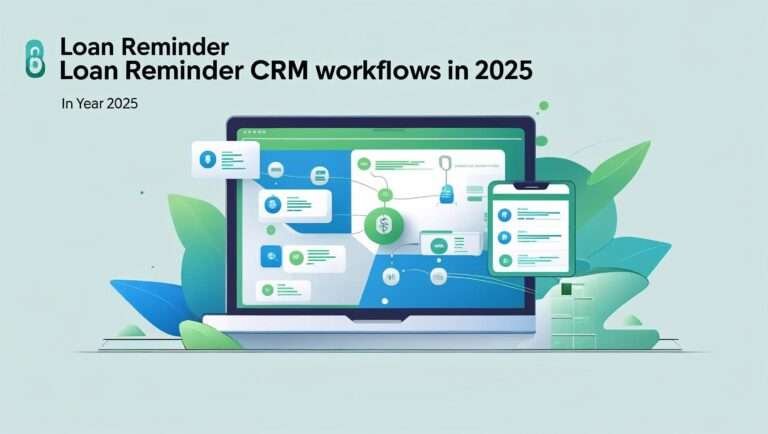
AI Fraud Detection Widgets Embedded in Finance CRM Portals (2025 Guide)
Finance teams and private credit managers no longer tolerate rule-only defenses that produce noisy alerts and slow manual reviews. In 2025 the best banks, fintech lenders, and corporate treasuries are embedding lightweight AI fraud detection widgets directly inside CRM portals so originators and relationship managers see risk signals where they work. These widgets combine behavioral biometrics, transaction telemetry, device intelligence, and explainable AI outputs to flag suspicious counterparties and anomalous deals before funds move. Embedding detection in the CRM turns risk controls from a back-office afterthought into a front-line decisioning tool that materially shortens investigation times and reduces losses. Elasticbiocatch.com

Why embedding AI widgets in CRMs matters now
Historically, fraud systems and CRMs lived in different worlds: anti-fraud teams monitored feeds while origination teams used CRMs to manage relationships. Embedding fraud widgets eliminates that separation. When a relationship manager opens a borrower profile, the widget surfaces a consolidated risk score, recent anomalous activities, and a short rationale — all without leaving the CRM. That means a single human decision point that blends commercial context with fraud intelligence, improving both user experience and control effectiveness. Banks and fintechs that adopt this approach also achieve faster remediation loops and fewer false positives because the widget factors in relationship context not visible to generic transaction engines. ElasticHSBC
What these widgets actually monitor in 2025
Modern widgets ingest a surprisingly broad set of signals: transaction patterns, account velocity, device fingerprinting, IP and geo-anomalies, digital identity metadata, payment routing paths, and behavioral biometrics like typing cadence or mouse motion. Some engines layer public-record and adverse-media feeds, while others apply natural-language models to contract text and correspondence to detect semantic mismatches. The synthesis of these signals into a short, explainable alert inside a CRM is the real innovation: instead of raw scores, users see reasons, confidence levels, and recommended next steps integrated into the deal timeline. DataDomebiocatch.com
How AI models are kept compliant and explainable
A major barrier to AI in banking has been explainability and regulatory scrutiny. In 2025 three technical advances help reconcile performance with auditability: explainable AI toolkits (like SHAP and LIME) that produce human-readable feature attributions; federated learning that lets institutions collaboratively train models without sharing raw data; and privacy layers such as differential privacy that mask sensitive inputs while preserving model utility. These approaches let CRMs display not only a risk score, but the top contributing factors and their weights—giving relationship managers and compliance officers a defensible basis for decisions. Research and pilots published in 2024–2025 show federated learning plus explainable methods can boost detection while meeting privacy constraints, and major banks have begun productionizing these patterns. MDPIUK FinanceNature
Example user flow: alert, context, action — all live in CRM
Imagine a credit officer opening a borrower’s CRM card and seeing a red “suspicious” widget. It summarizes that three invoices claimed as settled have inconsistent payment rails, device fingerprints in different countries were used to approve disbursements, and an unusual surge in refund claims occurred. The widget suggests a short checklist—initiate voice verification, request proof of delivery, or pause auto-settlement—plus a one-click action to open an investigation ticket with prepopulated evidence. That tight loop converts alerts into measurable reductions in loss and investigation lead time because the operational friction to act is removed. DataDome
Hidden tools and vendors you probably haven’t heard of
Beyond household names, there’s a growing set of niche vendors and research prototypes used as widgets in 2025. Firms like BioCatch are leaders in behavioral biometrics and are frequently embedded; others such as Feedzai and Elastic provide real-time scoring engines with GenAI augmentation. Newer entrants focus on modular SDKs that merchants and banks can drop into CRMs to add device forensics, watchlist matching, or federated anomaly models without heavy integration work. There are also specialized middleware providers that normalize signals from many vendors into a single widget feed so CRMs only need one integration to get dozens of detection capabilities. For banks with global footprints, this modularity is essential to scale consistent fraud controls across jurisdictions. biocatch.comFeedzaiElastic
Federated Explainable Models for Cross-Bank Fraud Sharing
One of the least publicly discussed but rapidly maturing patterns is federated explainable modeling for cross-bank fraud detection. Instead of sending raw transactions to a centralized vendor, banks collaboratively train a model over local data and exchange only model updates or anonymized feature attributions. The result is a stronger detector that benefits from a broader attack surface while preserving customer privacy and regulatory compliance. CRMs that surface federated model signals give relationship managers access to a “collective memory” of fraud patterns that would otherwise be invisible to a single institution. Early pilot results show higher detection rates and fewer false positives versus single-bank systems. UK FinanceMDPI
Behavioral Biometrics Widgets — the human signal behind the keyboard
Behavioral biometrics has graduated from browser-based fraud prevention to CRM-embedded signals. The widget now flags deviations in how a known user types, scrolls, or navigates contract documents inside the CRM, correlating that with transactional anomalies. Because these signals are subtle and continuous, they’re excellent at detecting account takeover, synthetic identities, and social engineering that standard rules miss. They also reduce friction: when the biometric profile matches expected behavior, CRMs can auto-clear low-risk flows; when it doesn’t, the widget elevates to human verification. This selective gating preserves client experience while improving safety. biocatch.com
GenAI-assisted evidence summarization — faster investigations
GenAI summarization engines are being embedded as secondary widgets that translate lengthy audit logs, chat transcripts, and contract versions into concise human narratives. Instead of sifting through thousands of lines, an investigator reads a one-page summary with named entities, timeline, and confidence markers. This greatly reduces the time to open a case and improves handovers between origination teams and fraud ops. Importantly, 2025 firms pair GenAI with retrieval-augmented systems so summaries cite exact source lines, preserving audit trails for compliance. TechRadarElastic
Comparison Table: CRM-Embedded Fraud Widgets vs. Traditional Fraud Systems
| Dimension | Traditional Transaction Systems | CRM Embedded AI Widgets |
|---|---|---|
| Where alerts appear | Separate fraud portal | Inside CRM where deals live |
| Context available | Limited; siloed | Full CRM context and history |
| Investigator friction | High (tool switching) | Low (one-click actions) |
| Data breadth | Transactional only | Behavioral, device, text, CRM metadata |
| Model sharing | Rare | Federated and collaborative options |
| Time to remediate | Days | Minutes to hours |
How these widgets integrate with treasury & banking (HSBC example)
Large corporate and bank clients using HSBC Premier Banking USA and similar institutional services benefit when widgets read bank payment rails and treasury positions. Integration means a CRM alert can correlate an off-pattern supplier payment with an imminent treasury sweep and, if needed, pause disbursement via an API call. HSBC and major global banks have published pilots showing AI reduces financial crime detection time and improves accuracy by embedding detection across client portals and payment dashboards—this is not theoretical but production practice in top institutions. Embedding fraud controls into the client’s CRM and banking interfaces is the next stage of protective finance. HSBC+1
Privacy and legal considerations: what compliance teams must watch
Embedding AI widgets inside CRMs touches privacy, surveillance, and explainability law. Compliance teams must ensure that behavioral biometrics capture and storage meet local data protection rules and that model decisions are auditable. Explainable outputs and retention policies—along with customer notification where required—are non-negotiable. Many firms adopt “privacy-by-design” for widgets, leveraging on-device signal processing, differential privacy, and strict data governance in vendor contracts to reduce regulatory exposure while keeping detection effective. Independent audits of models and documented human-in-the-loop processes are fast becoming contractual requirements with enterprise customers. MDPINature
Implementation patterns: light SDK vs full vendor suite
Firms generally pick one of two approaches: light SDK widgets for quick embeds, or full vendor suites that provide end-to-end detection, case management, and regulatory reporting. SDKs are excellent for rapid rollouts and localized control, while suites are preferable for organizations wanting turnkey operations and integrated compliance reporting. A common compromise is using a normalization layer that accepts multiple vendor widgets and harmonizes signals into a single CRM feed—this gives firms both agility and centralized oversight without vendor lock-in. Appinventiv
ROI and operational benefits backed by data
Banks and fintechs that have adopted CRM-embedded AI widgets report significant operational improvements: faster case initiation, fewer false positives, and higher conversion rates because fewer legitimate deals are blocked. Industry surveys and vendor reports in 2024–2025 show leading implementations reduce investigation time by more than half and increase relevant detection hits by multiples compared to rules-only systems. The combination of better signal fusion and lower human friction makes the ROI compelling despite initial integration costs. FeedzaiElasticROI and operational benefits backed by data
Banks and fintechs that have adopted CRM-embedded AI widgets report significant operational improvements: faster case initiation, fewer false positives, and higher conversion rates because fewer legitimate deals are blocked. Industry surveys and vendor reports in 2024–2025 show leading implementations reduce investigation time by more than half and increase relevant detection hits by multiples compared to rules-only systems. The combination of better signal fusion and lower human friction makes the ROI compelling despite initial integration costs. FeedzaiElastic
Deception Detection and Deepfake-Aware Widgets
As fraudsters use deepfakes and voice cloning, advanced widgets now include deception detection modules that analyze audio for synthetic artifacts and cross-validate voice samples with behavioral biometrics. In sales or KYC calls, CRMs surface a “deception risk” index that guides managers to request additional verification. With synthetic media proliferating, this capability is one of the newest and least covered arms of CRM-embedded fraud defense but will be pivotal for high-risk onboarding and large-ticket transactions. The TimesDeception Detection and Deepfake-Aware Widgets
As fraudsters use deepfakes and voice cloning, advanced widgets now include deception detection modules that analyze audio for synthetic artifacts and cross-validate voice samples with behavioral biometrics. In sales or KYC calls, CRMs surface a “deception risk” index that guides managers to request additional verification. With synthetic media proliferating, this capability is one of the newest and least covered arms of CRM-embedded fraud defense but will be pivotal for high-risk onboarding and large-ticket transactions. The Times
Deployment checklist for IT & risk teams
Successful deployments treat the widget like any other UX component: identify the CRM touchpoints to instrument, choose which signals matter most to your business flows, pilot with a single origination desk, and harden audit trails. Crucially, align SLAs between fraud ops and origination teams so that alerts surfaced in the CRM have a clear owner and response timeline. Measure KPIs such as time-to-investigate, false positive rate, and conversion impact to iterate rules and model thresholds. Proper change management and training are the final, often overlooked pieces that determine adoption and value. DataDome
FAQs
What is the single biggest benefit of embedding fraud widgets in CRMs?
Embedding provides contextualized alerts where decisions are made, reducing friction and improving response speed—turning detection into action in a single workflow. Elastic
Do behavioral biometrics violate privacy rules?
They can if poorly implemented. Modern approaches use on-device processing or strict consent mechanisms, and privacy-preserving layers like differential privacy reduce legal risk. Always consult legal teams before deploying. biocatch.comNature
Are federated models actually effective?
Yes—industry pilots show federated learning improves detection by incorporating cross-institution signals while preserving raw data privacy, making it attractive for consortiums and regulated sectors. UK Finance
How do widget vendors explain model decisions to auditors?
Vendors incorporate explainable AI packages that rank contributing features and provide source data pointers, enabling auditors to reproduce decisioning steps and justify actions. MDPI
Does HSBC use these techniques?
HSBC has publicly invested in AI for financial crime and partnered with major cloud and AI providers to scale detection, including internal projects that align with CRM and client portal strategies. HSBC+1
Final thoughts and roadmap (2026+)
The shift to CRM-embedded AI fraud widgets marks a maturity step for financial crime prevention—detection is moving from siloed systems to the frontline where client relationships are managed. The next months will see tighter federation across institutions, more standardized explainability for regulators, and increasingly hybrid human+AI workflows tuned to reduce both fraud losses and frictions for legitimate customers. Organizations that prioritize privacy-first design, vendor normalization layers, and tight integration with treasury (for firms working with partners like HSBC Premier Banking USA) will be best positioned to convert smart detection into resilient business outcomes. ElasticHSBC